YJCNC Engineering Materials Guide
18-8 Stainless Steel vs. 304: Differences, Uses & Cost
Clarify 18-8 versus 304 stainless—designation vs grade, composition, corrosion, machinability, and how to match a callout to a drawing.
“18-8” names a chromium-nickel stainless family; 304 is a specific grade. For machined components we need the grade on the drawing—not a retail label from cutlery or drinkware marketing.
Designation vs Grade
In fastener catalogs and consumer hardware, “18-8” is shorthand for roughly 18% chromium and 8% nickel austenitic stainless. In engineering drawings, that shorthand is incomplete. 304, 304L, 302, 305, and several fastener-oriented chemistries can all sit near that Cr–Ni band while differing in carbon, copper, or sulfur.
Before we cut bar or plate, we confirm the exact UNS/ASTM (or EN) grade, whether low carbon is required for welding, and whether free-machining 303 is allowed. Consumer debates about water bottles do not replace a material block on a print. In OEM and industrial equipment RFQs we also see “18/8,” “18-8 stainless steel,” and “food grade stainless” used interchangeably. None of those phrases define carbon max, sulfur max, or product form. If your quality plan references ASTM, AMS, or EN standards, the purchase order must name the grade those standards recognize.
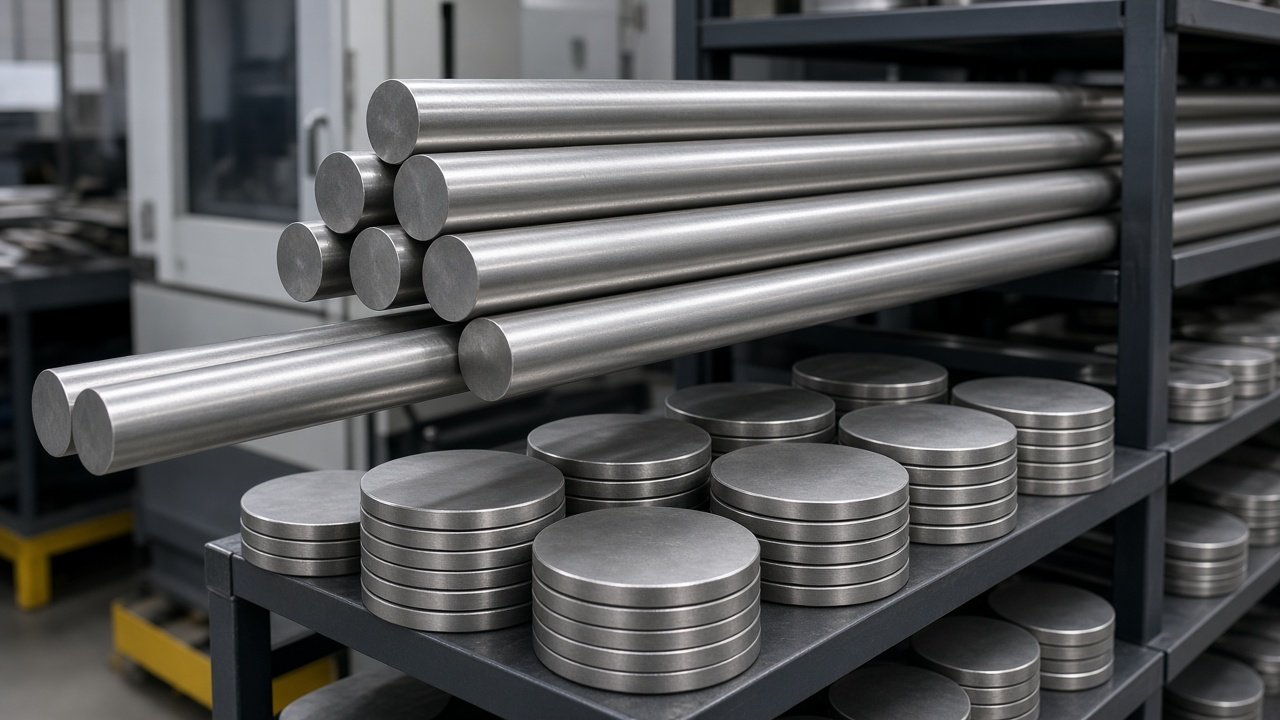
Procurement Traps We See on RFQs
- PO says 18-8, print says 304L. Receiving will follow the print if conflict resolution favors engineering drawings—clarify before stock is cut.
- Vendor quote lists 18-8 without UNS. Ask which grade and product standard will ship; request the mill cert template.
- Assuming all 18-8 fasteners equal bar stock 304. Fastener wire and machined housings may not share the same property tables.
- Swapping 303 for cycle time when the print said 304—later failing corrosion or cleanability expectations.
- Ignoring L grades on welded frames because “it is still 18-8.”
These traps are documentation problems as much as metallurgy problems. A mid-size CNC shop can machine the part correctly only when the grade is unambiguous.
18-8 Family vs Named Grades
| Callout | What it usually means | OK on the drawing? | Notes |
|---|---|---|---|
| 18-8 | Family label ≈18Cr–8Ni | Only after grade confirmed | Common on fasteners/hardware marketing |
| 304 (S30400) | Named ASTM/UNS grade | Yes | Default general-purpose austenitic |
| 304L (S30403) | Low-carbon 304 | Yes | Preferred for many welded assemblies |
| 302 / 305 | Related austenitics | If the drawing names them | Different forming/carbon stories |
| 303 (S30300) | Free-machining austenitic | Only if allowed | Not a silent 304 corrosion twin |
| 316 / 316L | Mo-bearing austenitic | If the drawing names them | Not “18-8” shorthand—different alloy |
Industry explainers from producer associations (for example BSSA materials articles) treat 18-8 as descriptive, not as a complete purchase specification. Put the grade—and the product standard—on the PO.
Composition, Corrosion, and Finish
Both “18-8” marketing and 304 point at austenitic stainless with chromium for passivity and nickel for austenite stability. 304/304L add controlled limits for carbon, manganese, silicon, phosphorus, sulfur, and nitrogen under the governing ASTM or EN standard. Corrosion performance still depends on finish, chlorides, temperature, and whether free iron was introduced during machining.
Passivation restores a clean chromium-rich surface after cutting when the drawing requires it. Electropolish is a separate callout. Neither is implied by writing “18-8” on a purchase requisition.
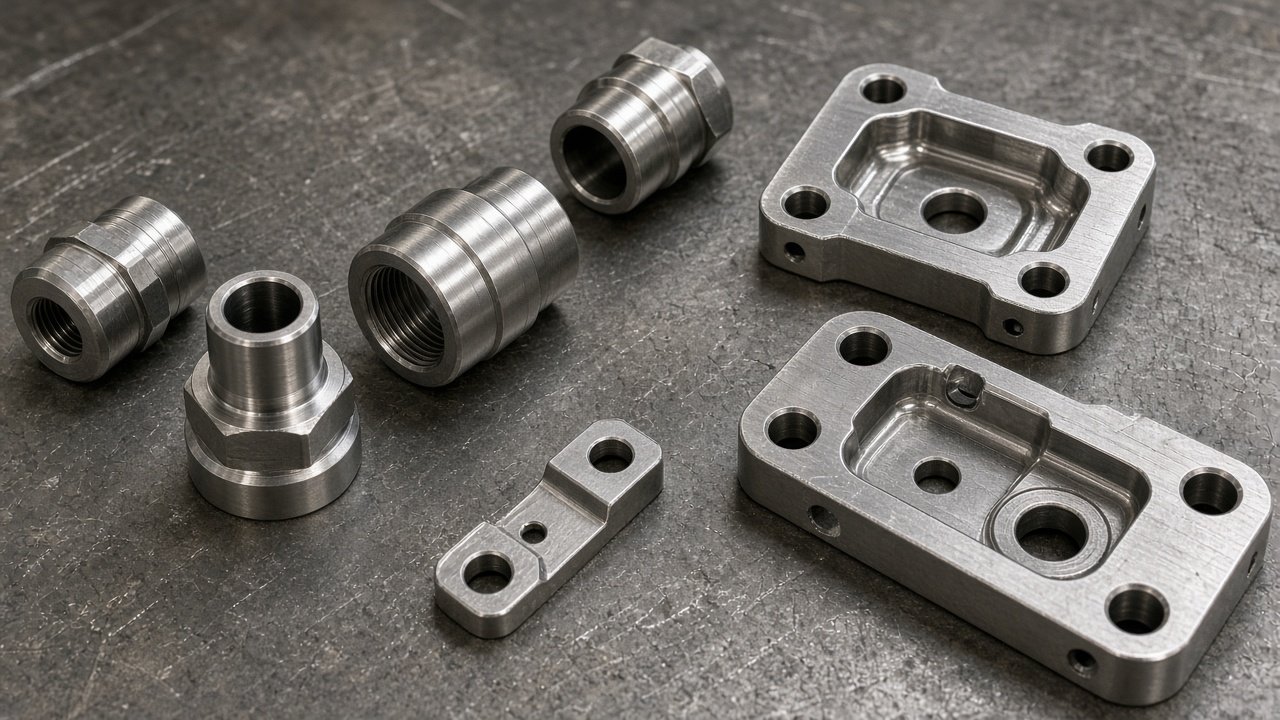
Machining Shafts, Fasteners, and Housings
304 work-hardens if the tool rubs; sharp geometry and steady feed matter on both turning and milling. Turned pins, spacers, and sleeves are routine; milled housings and brackets need attention to thin walls and clamp marks on cosmetic faces.
Process fit: CNC turning for concentric features from bar; CNC milling for prismatic parts. Related alloys and product forms are summarized on our stainless steel materials page.
If the buyer truly needs free-machining behavior for high volumes of small turned parts, the honest callout is 303—subject to corrosion review—not an unlabeled “18-8, whatever is easiest.”
How to Specify on a Drawing
Prefer an explicit grade (304, 304L, 316, 303, etc.), product standard, finish, and any passivation or certificate requirements. Example language pattern: “ASTM A276 Type 304L, annealed, mill cert with heat number, passivate per ASTM A967 nitric 2, as-machined Ra 1.6 unless noted.” Adapt to your quality system—do not copy blindly.
RFQ attachments should include STEP/PDF, critical GD&T, quantity, and whether prototype or production inspection depth applies. When a legacy BOM still says 18-8, add an engineering note mapping it to the approved grade before release.
Inspection uses CMM, optical systems, thread gauges, and surface instruments as the print requires. Soft-jaw marks and handling rust after aqueous wash are preventable with process discipline—state cosmetic limits early.
Cost, Lead Time, and Traceability
Named 304 bar is usually priced and certified more cleanly than a vague 18-8 hardware claim. The cost difference that matters for CNC is not the marketing label—it is whether you need mill certs, low-carbon chemistry, passivation, and dimensional FAIR depth. A fastener bought as 18-8 offline is a different supply chain from a machined housing cut from certified A276 bar.
When RFQs arrive with only “18-8 stainless,” we pause for clarification. That pause is cheaper than scrap after a customer audit rejects the heat because sulfur (303) or carbon (non-L) sits outside the approved grade. Lead time for clarified 304/304L jobs with stock on hand often mirrors other 300-series work: roughly 3–7 days for straightforward geometries, longer for scarce diameters or full documentation packs.
Traceability practice: retain heat numbers from receiving through shipping when the PO asks. Laser mark or bag-and-tag per the drawing. ISO 9001, ISO 13485, and AS9100D systems at YJCNC support documented control within their scopes—your contract defines which deliverables apply.
Worked Callout Examples
Example A — general industrial bracket: “Material: ASTM A240/A276 Type 304, annealed. Finish: as-machined. Passivate not required. Provide mill cert.” Example B — welded sanitary frame detail: “Material: 304L per ASTM A276, annealed. Welded assemblies use 304L filler as specified on weld map. Passivate per ASTM A967 after final machining.” Example C — high-volume turned spacer: “Material: 303 per ASTM A582 if corrosion review signed; otherwise 304. No silent substitution.”
Example D — legacy BOM cleanup: Engineering note on the drawing: “Where BOM lists 18-8, use 304L UNS S30403 unless otherwise approved.” That single note prevents purchasing from shopping unlabeled stock.
Inspection Depth and Passivation Decisions
Not every 304 bracket needs a full CMM program and nitric passivation certificate. Match inspection depth to risk. A painted industrial cover with generous tolerances can clear with caliper and thread-gauge checks. A medical-adjacent fluid path component may need CMM on sealing diameters, roughness records, and passivation documentation tied to the heat lot.
When the print is silent on passivation but the environment includes chlorides or frequent aqueous cleaning, raise the question during DFM. Adding passivation after first-article rejection is slower and more expensive than agreeing up front. Conversely, forcing passivation on a dry indoor decorative trim part can add cost without functional benefit.
Dimensional notes unique to austenitic stainless: thin walls spring after heavy cuts; long shafts chatter if unsupported; tapped holes work-harden if the tap rubs. Call out thread class and any helicoil or insert requirements. We plan tooling from those notes rather than guessing.
Related Grades Buyers Confuse with 18-8
302 and 305 appear in strip and wire products; they are not automatic drop-ins for machined 304 housings. 316 is sometimes requested verbally as “better 18-8,” which is metallurgically wrong—molybdenum changes the alloy family. Duplex and precipitation-hardening stainless are entirely outside the 18-8 nickname and need their own callouts.
European EN designations (e.g., 1.4301 for 304, 1.4307 for 304L) should be mapped explicitly on dual-marked drawings so purchasing does not order the wrong product form. If your print mixes ASTM and EN labels, include a cross-reference table on the notes sheet.
Frequently Asked Questions
Are 18-8 and 304 the same?
Often related, but 18-8 is not a complete specification. Put 304/304L (or the exact UNS) on the purchase order when the print requires it.
When is 303 a better machining callout?
When the drawing allows a free-machining austenitic grade and corrosion requirements still fit. Do not silently substitute 303 for 304.
Does the part need passivation?
Follow the drawing. Corrosion-sensitive or regulated parts often specify passivation after final machining.
Is writing 18-8 enough for food-contact equipment?
Usually no for engineered components. Food and beverage equipment prints typically name a grade, finish, and cleaning/passivation expectation. Confirm with the controlling hygienic design standard for your product.
Start Your Project
Request a Stainless Quotation
Share the drawing and exact stainless grade. YJCNC machines components under ISO 9001, ISO 13485, and AS9100D quality management systems with drawing-based inspection.