S7 tool steel · CNC machining
S7 Tool Steel CNC Machining for Impact-Loaded Parts
We machine custom S7 tool steel components to your drawings, including tooling, fixtures, and mechanical parts designed for impact loads. We review the application, material condition, target hardness, and inspection needs before recommending a manufacturing route.
Send us your part drawing, intended use, target hardness, and order quantity. We’ll assess the details for your RFQ—without treating the material grade alone as a guarantee of finished-part performance.
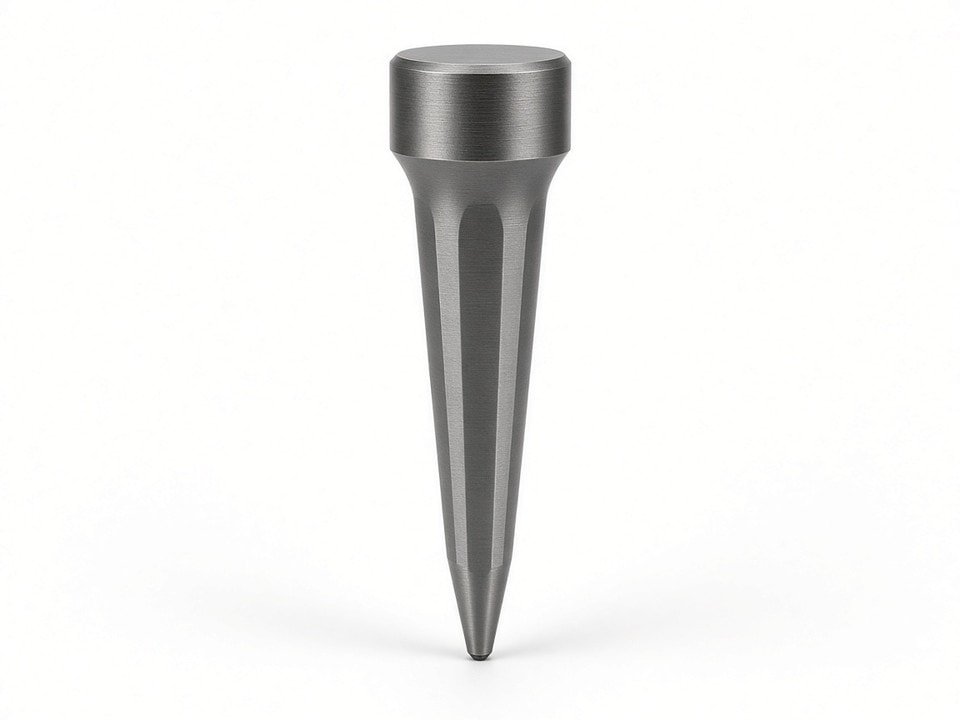
A project-specific manufacturing plan
We consider geometry, loading, material condition, hardness requirements, machining allowance, and post-treatment dimensional control together.
±0.01 mm
Listed precision for many machines; achievable tolerances are reviewed per part.
5-axis
Eight machines listed for complex profiles and multi-sided parts.
43 CNC lathes
For shafts, sleeves, bushings, and other turned components.
ISO · AS9100D
Quality systems certified to ISO 9001, ISO 13485, AS9100D, ISO 14001, and IATF 16949; project scope should be confirmed.
Engineering review
We start with the application, not just the grade
S7 is a shock-resisting tool steel commonly specified for tooling and components exposed to repeated impact. The grade alone does not determine how a finished part will perform. Geometry, heat-treatment condition, hardness, surface finish, loading direction, and the actual service environment all matter.
We review those factors alongside your drawing to establish a practical manufacturing route. Our assessment is not a guarantee of finished-part performance based solely on the material designation.
Material condition
Annealed or softer stock can machine differently from hardened material, affecting tool wear, cycle time, and achievable detail. Tell us the specified condition—or we’ll identify what is needed to quote accurately.
Hardness and heat treatment
Target hardness can affect the machining sequence and finishing allowance. Heat treatment is not listed among our in-house machining capabilities, so process route and responsibility must be agreed before quotation.
Allowance and final dimensions
For parts heat treated after machining, the required stock depends on geometry, material condition, and the agreed process route. We review critical surfaces and whether finishing is required afterward.
Inspection requirements
Hardness values, test locations, acceptance criteria, critical dimensions, and required inspection records should be included in your drawing or RFQ.
Manufacturing capability
We match the process to the part
We select a process based on geometry, feature access, quantity, and material condition. The figures below describe listed equipment; actual achievable tolerances depend on the part and inspection method, so we review critical dimensions during quotation.
CNC milling
34 listed centers
25 three-axis, 1 four-axis, and 8 5-axis CNC machines. Suitable for blocks, plates, pockets, complex profiles, and multi-sided features.
CNC turning
43 CNC lathes
For rotational components such as shafts, sleeves, bushings, and other turned parts.
Turn-mill machining
15 machines
May suit components that combine turned and milled features.
Swiss-type machining
10 lathes
Several configurations are listed for assessing small-diameter and slender components.
Drawing-based inspection
Measurement matched to the feature
Our inspection resources include a coordinate measuring machine, five optical measuring systems, height measuring instruments, micrometers, calipers, pin gauges, and thread gauges covering M1.0–M16. We review the appropriate method and documentation against your specified tolerances.
Parts we can review
Custom S7 components made to your drawing
- —Impact-loaded tooling and wear-related components
- —Fixture details, supports, and locating elements
- —Shafts, bushings, sleeves, and other turned parts
- —Milled blocks, plates, brackets, and housings
- —Custom mechanical components
Suitability depends on the drawing, material specification, intended service, and production requirements. If you’re comparing S7 with another material, include the operating conditions and performance requirements so we can review the manufacturing implications.
Project planning
Details we clarify before production
Which machining process fits my part?+
Milling is often appropriate for blocks, pockets, profiles, and mounting features. Turning suits rotational parts; turn-mill may fit combined features. For small or slender parts, we can assess whether Swiss-type machining fits the geometry and order requirements.
How do we handle heat-treatment requirements?+
Tell us whether you will supply material in the required condition or need an agreed heat-treatment step arranged as part of the project. We confirm the sequence, responsibility, and finishing allowance before quotation.
Can you support prototypes and repeat production?+
We review prototype, repeat-order, and production projects based on part requirements, material availability, and production planning. Include your quantity and expected repeat volume in the RFQ.
What quality documentation can be considered?+
Our quality management systems are certified to ISO 9001, ISO 13485, AS9100D, ISO 14001, and IATF 16949. Applicable certification scope should be confirmed. Include any supplier qualification, traceability, or inspection record requirements with your RFQ.
Request a machining quote
Tell us what your S7 part needs to do
Share the application, drawing, target hardness, and quantity. We’ll review the material condition, machining sequence, dimensional requirements, and inspection scope, then follow up on information needed for quotation.
Yabian Community, Shajing Street, Baoan District, Shenzhen, China
Include these details in your RFQ
- 1. Part drawings and revision level
- 2. Intended application and type of impact loading
- 3. S7 specification and current or required material condition
- 4. Target hardness, test method, and acceptance criteria
- 5. Critical dimensions, tolerances, and surface requirements
- 6. Heat-treatment requirement and who will provide it
- 7. Prototype or production quantity and expected repeat volume