Grade 9 Titanium Machining
Grade 9 Titanium Machining for Ti-3Al-2.5V Tube and Precision Parts
If your drawing specifies Grade 9 titanium, we begin by checking exactly what the part requires, not by assuming every Ti-3Al-2.5V job is the same. We review material form, supply condition, geometry, machining route and critical dimensions, because each of these affects process suitability and the quotation.
We provide custom CNC milling, turning, turn-mill and Swiss-type machining. For tubing in particular, we assess workholding and deformation risk separately from solid bar or billet work before we commit to a route.
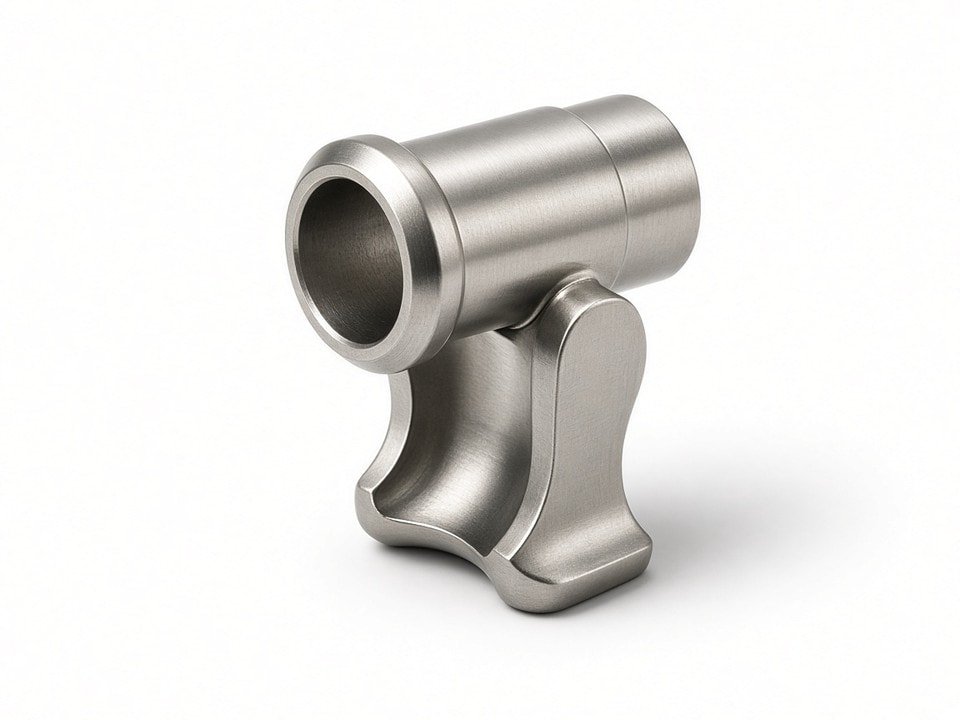
Review the Material Specification Before Quoting
The name "Grade 9" alone does not define a purchase or machining requirement. For Ti-3Al-2.5V components, we check the specification and material documentation requested for the job, including the product form and supply condition.
For tube projects
Please identify the applicable standard and provide dimensions, wall thickness and condition where available. Tube-related machining experience does not prove that every solid Grade 9 component is suitable for the same process.
For solid stock or other forms
State the product form clearly in your inquiry. We assess bar, billet and other forms on their own terms and do not carry tube conclusions across to them.
If we need to arrange material
Tell us in the inquiry. We will confirm whether a suitable supply route and the required documentation can be established before material is included in a quotation. We do not assume availability or certification without checking it for the specific project.
Machining Considerations for Grade 9 Titanium
Titanium's low thermal conductivity can concentrate heat near the cutting zone. Its elastic recovery can also affect tool contact and final dimensions.
On thin-wall tubing, clamping pressure and cutting forces may contribute to distortion. Interrupted features and slender sections add further stability concerns, so part geometry and setup are central to our review.
Depending on the drawing, our review may consider
- A suitable turning, milling, turn-mill or Swiss-type route
- Workholding and support for thin-wall or slender features
- Machining sequence and access to critical surfaces
- Allowances for finishing and dimensional verification
- The relationship between tolerances, material condition and part geometry
We confirm process suitability project by project. The final machining plan depends on the supplied specification, drawing and agreed inspection requirements.
CNC Processes We Can Evaluate
We select a route only after reviewing the part and confirming that its requirements fit the available process and equipment.
| Part or feature type | Process we can review | Typical considerations |
|---|---|---|
| Rotational parts, shoulders and turned profiles | CNC turning | Concentric features, diameters, grooves and thread requirements |
| Prismatic parts, pockets and mounting features | CNC milling | Feature access, datum strategy and number of setups |
| Parts combining turned and milled features | Turn-mill machining | Feature relationships and the potential to reduce handling |
| Small-diameter or slender components | Swiss-type machining | Part dimensions, length-to-diameter ratio and feature access |
| Tube-based components | Turning or a combined process, subject to review | Wall thickness, support, clamping and distortion risk |
A tube component may need purpose-appropriate support and handling. We confirm whether the requested geometry suits our setup before quoting. We do not infer suitability from the material grade alone.
Equipment and Production Scope
Our listed equipment includes 43 CNC lathes, 15 CNC turn-mill machines, 25 three-axis machining centers, one four-axis machining center and eight 5-axis CNC machines. We also list automatic lathes, Swiss-type lathes and gang-type CNC lathes for small turned components.
This range lets us assess different component sizes and feature combinations. A machine count does not guarantee that every part can be produced on a particular route, so we review the drawing, material form, required tolerance and order quantity first.
Listed precision figures
Our equipment inventory lists ±0.01 mm for several machining categories and ±0.02 mm for automatic lathes.
These are listed equipment specifications, not a blanket part tolerance or a guarantee for Grade 9 titanium. Achievable dimensions depend on the component, material, process and verification plan.
Dimensional Inspection and Documentation
For each project, we agree which characteristics need inspection and what evidence is required. This may include specified diameters, hole positions, profiles, threads, concentricity or surface finish, depending on the drawing.
Inspection resources
Coordinate measuring machine, optical measuring systems, height measuring instruments, micrometers, pin gauges and thread gauges. A surface roughness tester and hardness tester are also listed.
Quality management
YJCNC operates quality management systems certified to ISO 9001, ISO 13485, AS9100D, ISO 14001 and IATF 16949. Certification scope and project documentation should be confirmed during supplier qualification.
Projects We Can Assess
Grade 9 titanium machining may be relevant to procurement teams sourcing custom tubing features, turned components or machined parts made to a defined Ti-3Al-2.5V specification. We evaluate the actual component rather than assuming suitability from a broad industry category.
01OEMs planning repeat orders for drawing-defined components
02Engineering teams validating a design or revising a prototype
03Industrial equipment manufacturers sourcing custom turned or milled parts
04Medical device and aerospace supply-chain teams with defined quality and documentation requirements
05Contract manufacturers seeking an additional machining source
For thin-wall tubing, include the tube dimensions and the features to be machined. For solid or other forms, identify the stock form separately so we can assess workholding, route and inspection needs without mixing material forms.
What to Include in Your RFQ
A complete inquiry helps us identify technical questions early. Open the items below to see what to provide. If something is not finalized, tell us what is known and list the open items.
Request a Grade 9 Titanium Machining Review
Send your material standard, part drawing and application requirements. We will review the material form, supply condition, geometry, machining route, key dimensions and inspection needs before confirming whether the project fits our capabilities and preparing a quotation.
- info@yjcncmachining.com
- Address
- Yabian Community, Shajing Street, Baoan District, Shenzhen, China
Include your target quantity and documentation requirements so we can assess the request against the full scope, not just the part geometry.