LDPE CNC Machining
LDPE CNC Machining for Soft, Lightweight Polyethylene Parts
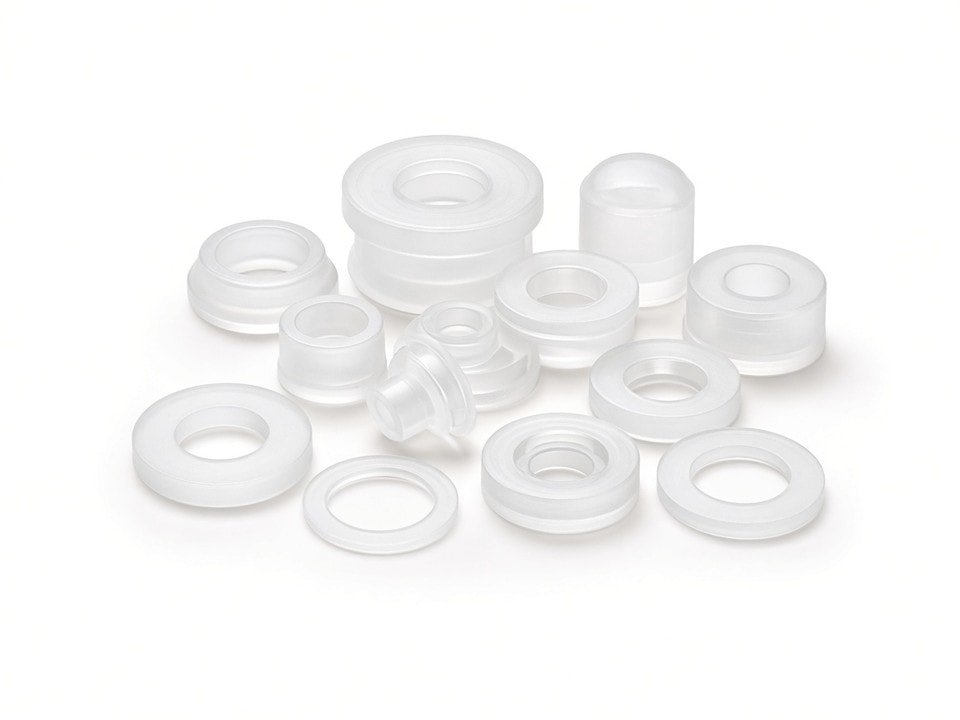
Many LDPE parts we are asked to machine are not structural. They are spacers, caps, insulating bushings, wear pads, sleeves, and fixture components where low weight, flexibility, and chemical resistance matter more than stiffness.
LDPE can be a good choice for these parts, but it behaves very differently from metals and rigid engineering plastics on the machine. Before we quote, I check whether LDPE suits your part's geometry, load, and working environment, and I will tell you when another material would serve better.
When LDPE Makes Sense for Your Part
LDPE works well when the part needs to flex, seal, absorb light impact, insulate, or resist moisture and many common chemicals. It is also light and inexpensive compared with many engineering plastics.
Where LDPE fits well
- Parts that need to flex, seal, or absorb light impact
- Insulating components and wear pads
- Applications exposed to moisture and many common chemicals
- Lightweight, cost-sensitive parts where stiffness is not the main requirement
Where I would advise caution
- Thin walls or long unsupported sections that must hold their shape under load
- Features that must stay within tight position or bore-size tolerances during assembly
- Parts exposed to continuous heat, since LDPE softens at a relatively low temperature
- Mounting points that will be tightened repeatedly or carry significant torque
If your part is a rigid frame, a load-bearing bracket, or a high-stiffness precision component, I will say so during review and discuss alternatives such as POM, PA, PEEK, or metal.
How LDPE Behaves During Machining
Machining LDPE is mostly a question of controlling movement. Most problems I see come from the material's low stiffness and its response to heat and clamping force.
Select each topic to see how we manage it on the machine.
Soft stock deforms under vise jaws or chuck pressure, so a part that measures correctly on the machine may spring back after release. I reduce clamping force, use soft jaws or supporting fixtures, and where needed machine in stages so the part can relax between operations.
Common Risks and Our Approach
Each risk below shows up as a visible symptom on the part, and each has a defined control in our process.
| Risk | What it looks like on the part | How we manage it |
|---|---|---|
| Clamping distortion | Out-of-round bores, flat faces that are not flat after release | Soft jaws, reduced clamping force, support fixtures, staged machining |
| Thermal growth | Diameters or lengths that shift after cooling | Controlled cutting parameters, agreed measurement timing |
| Hole position drift | Pattern shifts or fails to align with mating parts | Fixture design, hole location verification on CMM or optical system |
| Bore springback | Bore smaller or larger than nominal after cutting | Finishing allowance, bore check after stabilization, pin gauge verification |
| Poor surface finish | Smearing, tearing, or drag marks | Sharp tooling, adjusted speeds and feeds, final light finishing pass |
| Edge burrs | Burrs that prevent seating or affect sealing | Specified deburring operation, edge inspection |
Hole Position, Bore Fit, and Assembly Clearance
Fit is usually the first thing that fails in LDPE assemblies. Because the material is soft and may move slightly after machining, a bore that is correct on the drawing can still be too tight or too loose once the part is installed on a shaft or pin.
Before machining
Send me the mating part dimensions or assembly drawing if available. I can then recommend bore allowances, hole pattern tolerances, and whether a test fit should be done on a sample. For sealing or sliding applications, I also review how the part is held in service and whether a press fit or clearance fit is more appropriate.
Verification
Hole position accuracy depends on both the machine and the fixture. We machine hole patterns on our 3-axis and 5-axis CNC machining centers and verify them with our CMM and 2D optical measuring systems. Where the drawing requires specific diameters, we check them with pin gauges, digital calipers, and micrometers.
Our Machining Capabilities for Polymer Parts
We machine LDPE on the same equipment we use for other production work, selected according to part shape and volume.
CNC milling
25 three-axis CNC machining centers, one 4-axis machining center, and 8 5-axis machines for brackets, housings, plates, and multi-face parts.
CNC and automatic turning
43 CNC lathes for sleeves, bushings, spacers, and shafts, plus 30 automatic lathes for small repeat-run turned parts.
Turn-mill machining
15 CNC turn-mill machines for parts that combine turned and milled features in one setup, reducing handling and helping maintain relative position.
Swiss-type machining
10 Swiss-type lathes (5-axis, 6-axis, and others) for slender or small-diameter parts.
Gang-type CNC lathes
7 machines for short runs of small shafts and connectors.
Inspection and quality
CMM, five 2D optical systems, concentricity and surface roughness instruments, and pin, ring, and plug gauges from M1.0 to M16. Our quality systems are certified to ISO 9001, ISO 13485, AS9100D, ISO 14001, and IATF 16949, within the scope stated on each certificate.
What to Send for a Quotation
To give you a useful quote and an honest feasibility review, please send the following information.
If you are not sure whether LDPE is right for your part, send the drawing and a short description of the application. I will review the design, identify machining risks, and recommend either LDPE with suitable process controls or a different material.
- Drawings: PDF, STEP, or DXF/DWG, with dimensions, tolerances, and critical features marked.
- Functional requirements: how the part is used, and what it seals, slides on, or holds.
- Quantity: prototype, low-volume, or recurring production, with expected annual volume.
- Working environment: temperature range, chemical contact, moisture, UV exposure, and mechanical loads.
- Mating parts: assembly drawings for any fit-critical features.
- Finish, edges, and inspection: surface requirements, deburring or cleaning needs, and any first article or dimensional reporting.
- Material: LDPE grade or density if specified, and whether you will supply the stock or need us to source it.
Request an LDPE CNC Machining Quotation
Send your drawing, functional requirements, quantity, and working environment, and I will review feasibility and machining risks before we quote.
- Email: info@yjcncmachining.com
- Phone:
- WhatsApp:
- Address: Yabian Community, Shajing Street, Baoan District, Shenzhen, China