CNC machining · Copper components
C145 Tellurium Copper Machining
We machine custom copper components to customer drawings, with CNC turning, milling, turn-mill, and Swiss-type machining available for suitable geometries. We review your material specification alongside electrical, dimensional, and surface requirements before recommending a manufacturing approach.
C145 Tellurium Copper is commonly identified as C14500. We assess whether the specified grade is suitable for your part and its intended function rather than assuming that a grade name alone defines production requirements.
For a useful quote, send your drawing, required material standard, order quantity, and critical performance criteria.
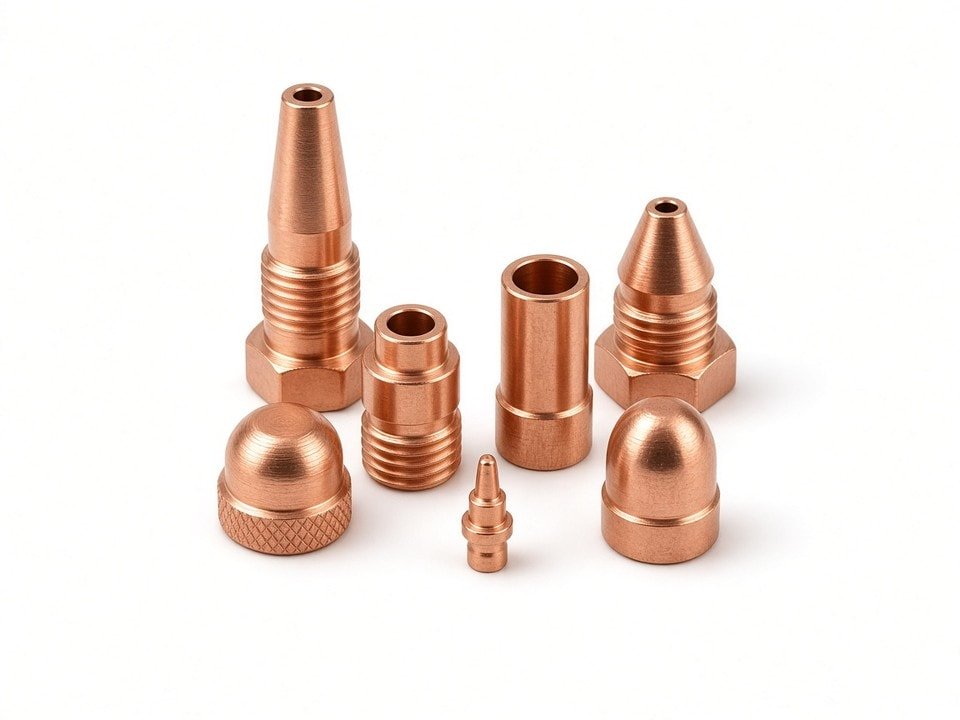
We match the machining route and inspection plan to the component’s geometry, material condition, and functional requirements.
Material definition first
We review grade, governing standard, product form, condition, and documentation needs.
Function-led assessment
We assess conductivity and other critical requirements against the specified test method and acceptance criteria.
Drawing-based verification
We plan machining and inspection around your tolerances, features, finishes, and quantity.
Material and performance
Start with the material specification
A C14500 designation may not define everything needed for production. The governing standard, product form, temper or condition, and required documentation can affect sourcing, machining, and evaluation.
Confirming the material
We compare the specified grade and condition with the part requirements rather than treating all copper stock as interchangeable. Include the exact standard or equivalent-grade rule on your drawing or purchase specification. Any proposed substitution should be reviewed and approved by you before production.
Balancing function and machinability
C145 Tellurium Copper is often selected when a design needs copper’s functional characteristics together with improved machinability compared with some other copper grades. Actual electrical or thermal performance depends on the specified material, condition, geometry, and manufacturing route.
Critical material-dependent performance needs explicit acceptance criteria.
We do not treat typical material properties as a guaranteed result for a finished component. If conductivity, heat transfer, or another value is critical, provide the required value, test method, and acceptance criteria in your RFQ. We can then assess whether the drawing and inspection plan offer a practical way to verify it.
Machining capabilities
We select the process for the part—not just the material
Our equipment base supports several machining routes. We assess geometry, size, tolerance scheme, and order quantity to determine which route is appropriate.
43 CNC lathes listed
CNC turning
For suitable rotational parts such as pins, sleeves, bushings, and connectors.
30 automatic lathes listed
Automatic turning
Available for appropriate small turned components and repeat-order requirements.
Multiple configurations
Swiss-type machining
An option to review for small-diameter or slender components. Our inventory lists 5-axis, 6-axis, and other configurations.
25 three-axis · 1 four-axis · 8 five-axis listed
CNC milling
For prismatic features such as flats, mounting faces, pockets, and cross-holes.
15 CNC turn-mill machines listed
Turn-mill machining
A suitable setup can combine turning and milling features. We confirm process suitability during drawing review; equipment counts describe listed resources, not a promise that every process or machine fits every component.
Design for machining
Features we review closely
C145 Tellurium Copper can be more machinable than some other copper alloys, but feature design still matters. Material behavior can affect chip formation, edge condition, and surface finish. Thin walls, small drills, narrow grooves, and intersecting holes may need particular attention in process planning.
Clear callouts help us distinguish functional features from non-critical dimensions and plan inspection accordingly.
Holes and bores
Diameter, depth, position, and fit or concentricity requirements.
Slots and grooves
Width, depth, corner geometry, and burr risk at intersecting features.
Threads
Thread form, engagement length, and the intended inspection method.
Thin or slender sections
Potential for distortion or handling damage during machining.
Edges and transitions
Chamfers, radii, and deburring expectations for assembly or electrical contact.
Critical faces
Surface finish and flatness where the part interfaces with another component.
Surface and inspection
Plan quality around the part’s interfaces
Contact faces, sealing areas, sliding interfaces, and visible surfaces may each need different finish expectations. Please specify roughness values, edge-break requirements, coating or plating needs, and any restrictions on surface damage.
Our inspection resources include a coordinate measuring machine, optical measuring systems, height measurement instruments, a concentricity instrument, a surface roughness tester, and dimensional gauges. We select suitable equipment for drawing-defined characteristics. If you need a specific report format or inspection record, state that in the RFQ so we can review it before quoting.
Quality systems
Drawing-based verification
Our quality management systems are certified to ISO 9001, ISO 13485, AS9100D, ISO 14001, and IATF 16949. Certification applicability depends on the relevant scope and project requirements, so please identify any supplier-qualification or documentation conditions that apply to your order.
We review inspection needs against the drawing and agreed acceptance criteria. Dimensional inspection alone does not establish electrical or thermal performance; include the required test method and documentation expectations if material performance must be verified.
Project review
Matching the process to your project
A turned contact pin may suit automatic or Swiss-type machining, while a housing with multiple milled faces may be better suited to milling or turn-mill. For prototypes, design validation and manufacturability feedback may be priorities; for repeat orders, process consistency and agreed inspection criteria become central.
We assess the route against
- Part geometry and material condition
- Required tolerances and datum scheme
- Electrical or other functional requirements
- Surface finish, burr, and edge specifications
- Prototype, repeat-order, or production quantities
- Inspection documentation and acceptance criteria
If the design is still changing, send the current drawing revision and identify features under review. This helps us keep quotation assumptions aligned with the part you intend to release.
Common questions
C145 Tellurium Copper machining FAQs
Can you machine C145 Tellurium Copper from a customer drawing?
We review custom drawings for CNC turning, milling, turn-mill, and Swiss-type machining suitability. Feasibility depends on part geometry, material specification, tolerances, quantity, and inspection requirements.
Should I specify C14500 or a material standard?
Include the exact grade designation and governing standard shown on your drawing or purchase specification. Also state the required product condition and whether substitutions are permitted. We will clarify any points that affect the quotation.
Can you guarantee conductivity in the finished part?
We do not infer a finished-part conductivity guarantee from a typical material description. If conductivity is a critical acceptance requirement, provide the target, test method, and documentation expectations for review.
What information helps assess small holes, slots, or fine features?
Provide a dimensioned drawing with tolerances, datum references, and any requirements for burrs, edge breaks, surface finish, or feature inspection. These details help us evaluate process suitability and verification needs.
Request a quotation
Let’s review your C145 Tellurium Copper part
Send us your drawing, material standard, quantity, and critical performance requirements. We’ll review the material, process, and inspection details and follow up on any points that need clarification before quotation.
You can also email us at info@yjcncmachining.com or contact us with your project details.
Business address: Yabian Community, Shajing Street, Baoan District, Shenzhen, China
Information to include in your RFQ
- The latest 2D drawing and, if available, a 3D model
- Material designation, governing standard, and required condition
- Prototype and production quantities, including estimated repeat demand
- Critical dimensions, tolerances, and datum requirements
- Electrical, thermal, or other functional criteria and test methods
- Surface finish, deburring, coating, and inspection documentation requirements