CNC machining for robotics and automation
Robotics Machining for Precision Components
We manufacture custom CNC-machined parts for robotics manufacturers, automation equipment companies, motion-control businesses, and engineering teams. We review each component against its drawing, fit requirements, material, weight targets, and expected order volume.
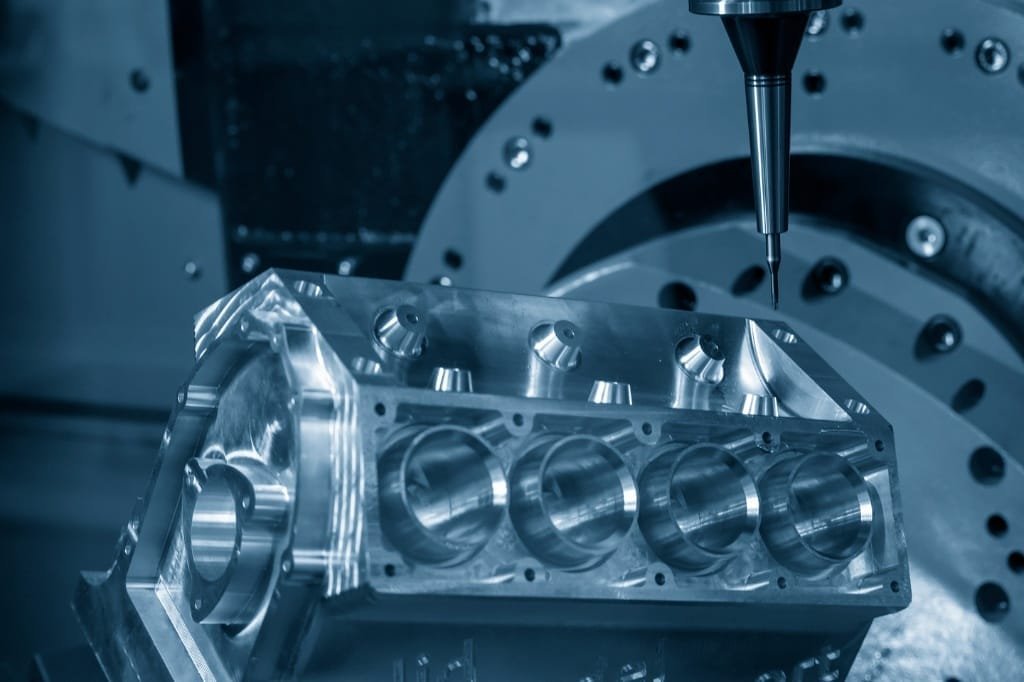
Parts shaped around your assembly requirements
From precision shafts and actuator components to housings and lightweight structures, we assess the features that matter to fit, alignment, and movement.
Component range
Components for robotic systems
We produce custom components for development projects and repeat production, subject to the part’s requirements. Share the drawing and intended fit or function so we can identify features that need particular attention during machining and inspection.
Discuss a componentPrecision shafts and pins
For rotating or sliding assemblies where fit and alignment matter.
Actuator components
Turned and milled features assessed against specified interfaces.
Connectors and threaded parts
Mechanical interfaces produced to drawing and thread requirements.
Mounts, brackets, and installation bases
Parts with defined mounting, locating, and hole-pattern features.
Housings and covers
Machined profiles and mounting features for equipment assemblies.
Lightweight structures, bushings, and sleeves
Evaluated against specified material, weight, and shaft-interface requirements.
Machining options
A process selected for the part
Different geometries call for different machining routes. We assess the part’s features and order volume rather than force every design onto the same equipment.
Select a process to see common applications.
CNC milling
A suitable option to assess for brackets, housings, mounting plates, and components with prismatic or multi-sided features. Our equipment inventory includes 3-axis, 4-axis, and 5-axis CNC machines.
CNC turning
We assess turning for shafts, sleeves, bushings, pins, and other rotational components, considering specified fits and concentricity requirements.
Turn-mill machining
For parts that combine turned surfaces with milled features, we review geometry and feature relationships to determine whether a turn-mill route is appropriate.
Swiss-type, automatic turning, and screw machining
Swiss-type machining can support small, slender, and complex turned components. Automatic turning and screw machining can be considered for applicable small turned and threaded parts.
Equipment reference
Listed machining precision figures
Our equipment inventory lists CNC machining precision figures of ±0.01 mm for several machine categories, ±0.02 mm for automatic lathes, and ±0.05 mm for screw machines.
These are listed equipment figures, not a blanket guarantee for every part or feature. Achievable results depend on geometry, material, tolerances, process selection, and inspection requirements. We review the drawing before confirming suitability.
Engineering review
We match the process to the features that affect fit and motion
A shaft with a concentricity requirement may need a different process plan from a mounting plate controlled mainly by hole position and flatness. We review key drawing characteristics before recommending an approach.
Clear requirements help us identify manufacturing and inspection considerations early, including features that may affect assembly gaps or movement. We do not infer robot positioning accuracy or complete-system performance from an individual machined part.
-
01
Fits and clearances
Requirements between mating parts, including the intended assembly fit.
-
02
Concentricity, alignment, and hole positions
Controls for rotating or coaxial features and mounting or locating patterns.
-
03
Material, weight, geometry, and access
Specified material and weight targets, part size, shape, and feature accessibility.
-
04
Quantity and inspection expectations
Prototype, repeat-order, or production volumes and verification needs tied to drawing characteristics.
Development through repeat orders
Support for evolving robotics projects
Our equipment covers multiple CNC processes and part configurations, including 3-axis and 4-axis machining centers, 5-axis CNC machines, CNC lathes, turn-mill machines, Swiss-type lathes, gang-type lathes, automatic lathes, and screw machines.
Prototype and design evaluation
We review parts for development projects and fit checks against the submitted requirements.
Drawing revisions
When a design changes, share the revised drawing and identify affected features so we can reassess the approach.
Repeat production
The appropriate manufacturing route depends on part features and quantity. We confirm suitability against the drawing and project requirements rather than assuming every component fits every machine type. Clear specifications and expected volumes help us review process and inspection needs for recurring supply.
Quality and inspection
Verification focused on drawing requirements
Robotic components may rely on several related dimensions to assemble and move consistently. We use available inspection resources to support drawing-based verification, with the inspection plan determined by the part and its specified requirements.
- •Coordinate measuring machine for 3D dimensional and geometric inspection
- •Optical measuring systems for profiles, hole positions, and dimensions
- •Height measuring instruments and height gauges
- •Concentricity measuring instrument
- •Surface roughness and hardness testers
- •Coating thickness measurement equipment
- •Micrometers, calipers, gauge blocks, pin gauges, and thread gauges
Quality management systems
We operate quality management systems certified to ISO 9001, ISO 13485, AS9100D, ISO 14001, and IATF 16949. Certification scope should be confirmed for the specific product and project. Include documentation or inspection expectations with your inquiry so we can review them before quotation.
Robotics and automation projects
Share the details that guide your RFQ
For engineering and product development teams, we can review drawing details and manufacturing considerations during quotation. For procurement and production teams, clear specifications and expected volumes help us assess process and inspection needs.
01Part drawing or 3D model
02Required fits, tolerances, concentricity, and hole-position controls
03Material specification and any weight target
04Surface finish, coating, or other finishing requirements, if applicable
05Prototype quantity and estimated repeat-order or annual volume
06Inspection, documentation, or quality-system requirements
Please identify critical-to-assembly features and relevant mating parts. That helps us focus the manufacturing review on the dimensions that matter to your design.
Submit drawings for reviewRequest a robotics machining review
Send us your drawings, fit requirements, and estimated order quantities.
We will review the information for process suitability, inspection needs, and quotation requirements. Include critical-to-assembly details and any documentation expectations.
YJCNC
Yabian Community, Shajing Street, Baoan District, Shenzhen, China
Email: info@yjcncmachining.com