Custom plastics · CNC machining
Custom Polypropylene (PP) CNC Machining
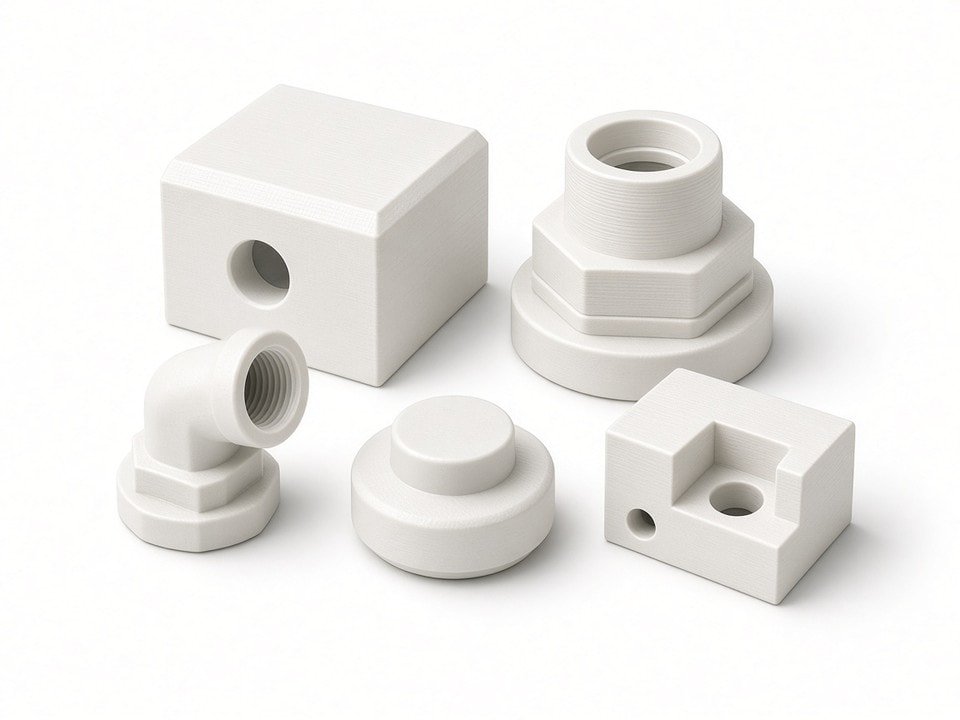
We review and manufacture custom PP components to customer drawings, subject to material grade, part geometry, and process suitability. We support industrial equipment, fluid systems, and instrument manufacturers seeking lightweight, chemical-resistant, custom plastic parts.
PP’s flexibility and thermal expansion can affect machining, dimensions, and assembly. We assess the intended media, operating temperature, loads, material specification, and dimensional requirements—not just the drawing.
For an initial review, share your part drawing, working conditions, and required PP material grade.
Machining options
Milling, turning, turn-mill, Swiss-type
Project review
Material, geometry, and service conditions
Design review
We consider machining and assembly together
A feature that is straightforward in metal may need a different approach in PP, especially with thin walls, narrow slots, press fits, or tight dimensional limits. We review each drawing alongside the component’s function and intended installation.
Our review considers how flexibility, cutting heat, clamping, and temperature-related dimensional changes could affect fit or performance. If a requirement needs clarification, we raise it during quotation review so the manufacturing plan reflects the intended use.
| Design or service factor | Why it matters | What we review |
|---|---|---|
| Material flexibility | Thin sections can deflect during machining, handling, or assembly. | Wall thickness, unsupported areas, clamping surfaces, and load direction. |
| Thermal expansion | Dimensions can change with temperature, affecting fits and clearances. | Operating and measurement temperatures, mating parts, and critical dimensions. |
| Dimensional stability | Geometry and service conditions can influence part size and shape. | Flatness, concentricity, hole positions, and inspection conditions. |
| Holes and slots | Deep, narrow, or closely spaced features can affect tool access and part stability. | Feature depth, width, spacing, edges, and tolerances. |
| Assembly requirements | Interference fits and high clamping loads may deform plastic components. | Fasteners, mating materials, fit type, torque, and load conditions. |
| Chemical exposure | Compatibility depends on the specific PP grade and service environment. | Media or composition, concentration, exposure time, and temperature. |
Manufacturing capabilities
CNC processes for custom PP components
We select a machining route based on geometry, size, feature layout, and order requirements. Our equipment includes milling, turning, turn-mill, and Swiss-type machines; the best fit is confirmed during project review.
| Machining process | Equipment in our inventory | Typical component features |
|---|---|---|
| CNC milling | 25 three-axis centers; 1 four-axis center; 8 5-axis CNC machines | Housings, brackets, plates, pockets, profiles, and multi-sided features |
| CNC turning | 43 CNC lathes; 7 gang-type lathes | Round parts, sleeves, bushings, shoulders, and concentric features |
| Automatic turning | 30 automatic lathes | Pins and small turned components, subject to geometry and material suitability |
| Turn-mill machining | 15 turn-mill machines | Parts combining turned surfaces with milled flats, slots, or other features |
| Swiss-type machining | 10 Swiss-type lathes across listed configurations | Small or slender components, subject to dimensions and process review |
Equipment figures are not guaranteed PP part tolerances.
The equipment inventory lists precision figures of ±0.01 mm for several machine categories, ±0.02 mm for automatic lathes, and ±0.05 mm for screw machines. Achievable part tolerances depend on material grade, geometry, dimensions, machining strategy, and inspection method. We review critical requirements against the drawing before confirming a quotation.
Feature planning and inspection
Plan around the features that affect fit
Part geometry and service conditions help determine how we machine and verify PP components. We pay particular attention to clamping pressure, cutting heat, and deformation during measurement.
- Walls and pockets: We review thin sections, deep pockets, and unsupported areas for potential machining deflection.
- Holes and slots: We assess depth, spacing, access, and fit relative to mating parts.
- Threads and fasteners: We review thread details and installation loads, since tightening can affect plastic differently from metal.
- Critical dimensions: We identify characteristics that matter to assembly or function and align inspection to drawing requirements.
Dimensional verification for defined requirements
Where appropriate to the part and specified features, our available dimensional inspection resources include CMMs, optical measuring systems, height instruments, and gauges. The inspection plan depends on the component, its critical features, and customer requirements.
Share the mating-part interface
If your component fits against a metal, plastic, or elastomeric part, include interface information with the RFQ. It helps us assess clearances, fits, and inspection priorities.
Quality and material review
Confirm the grade and applicable requirements
We operate quality management systems certified to ISO 9001, ISO 13485, AS9100D, ISO 14001, and IATF 16949. Applicable certification scope should be confirmed for the specific project and requested documentation.
Food-contact, medical, and chemical-equipment applications
For these uses, we need to confirm the specific PP grade and applicable compliance, documentation, and traceability requirements before quoting. We do not infer food-contact, medical, or chemical compatibility from “PP” alone.
Application suitability depends on real service conditions
We consider custom PP components where low weight, chemical resistance, or electrical insulation may matter. For chemical service, provide the actual media and exposure conditions. For load-bearing or close-fit parts, include load direction, mating components, and operating temperature.
Potential applications
Custom components for equipment and fluid systems
We review PP machining projects for prototypes, repeat orders, and production runs, subject to project requirements and the selected grade.
Industrial and fluid handling
Components for industrial equipment and fluid-handling systems, evaluated against the actual media and service conditions.
Housings and mounting parts
Custom housings, covers, spacers, and mounting components shaped to the specified assembly requirements.
Instrument components
Parts with defined dimensional, fit, and inspection requirements for instruments and equipment.
Turned and milled details
Small turned components or milled features for equipment and product development, subject to process review.
Prepare your RFQ
What to include in a PP machining request
Complete project information helps us assess process suitability, identify open technical questions, and prepare a more useful quotation.
Not sure which grade to specify?
Tell us what the part will encounter and what it must do. We can identify what needs confirmation before making a material or process recommendation.
| RFQ parameter | Details to provide |
|---|---|
| Part definition | 2D drawing, 3D CAD file, revision level, and quantity. |
| Material | PP grade, supplier or specification if defined, and required material documentation. |
| Operating conditions | Media, concentration where applicable, temperature range, exposure duration, and environment. |
| Mechanical requirements | Loads, pressure, fastening method, and expected impact or flexing. |
| Dimensions and assembly | Critical tolerances, fits, surface requirements, inspection features, mating-part dimensions, and installation method. |
| Compliance requirements | Applicable customer or regulatory requirements, documentation, and traceability needs. |
| Order plan | Prototype quantity, expected repeat quantities, and forecast if available. |
Common project questions
Clarify material and tolerance expectations
Can you confirm chemical compatibility from “PP” alone?
No. Compatibility depends on the specific PP grade and service environment. Provide the media or composition, concentration, exposure duration, and temperature for review.
Are the machine inventory precision figures guaranteed part tolerances?
No. They are equipment-list figures, not guaranteed tolerances for a PP component. We assess achievable requirements against the material, part geometry, machining approach, and inspection method.
What do you need for a food-contact or medical application?
We need to confirm the specific material grade and applicable compliance, documentation, and traceability requirements before quoting. Please include the relevant requirements with your drawings and working conditions.
Request a quotation
Send us your PP part requirements
Share your drawing, working conditions, and material specification. Include required quantity, critical dimensions, and any applicable compliance requirements. We will review machining suitability and follow up on information needed to quote.
When available, include the 2D drawing, 3D CAD file, mating-part details, and relevant material documentation.
YJCNC
Address: Yabian Community, Shajing Street, Baoan District, Shenzhen, China
Email: info@yjcncmachining.com