Custom CNC manufacturing
Grade 1 Titanium CNC Machining
We manufacture custom CNC-machined components to customer drawings, including parts specified in Grade 1 titanium. Before quoting, we review the material standard, part geometry, application environment, inspection requirements, and material availability.
Share your drawing and material specification with us to discuss project feasibility and request an RFQ.
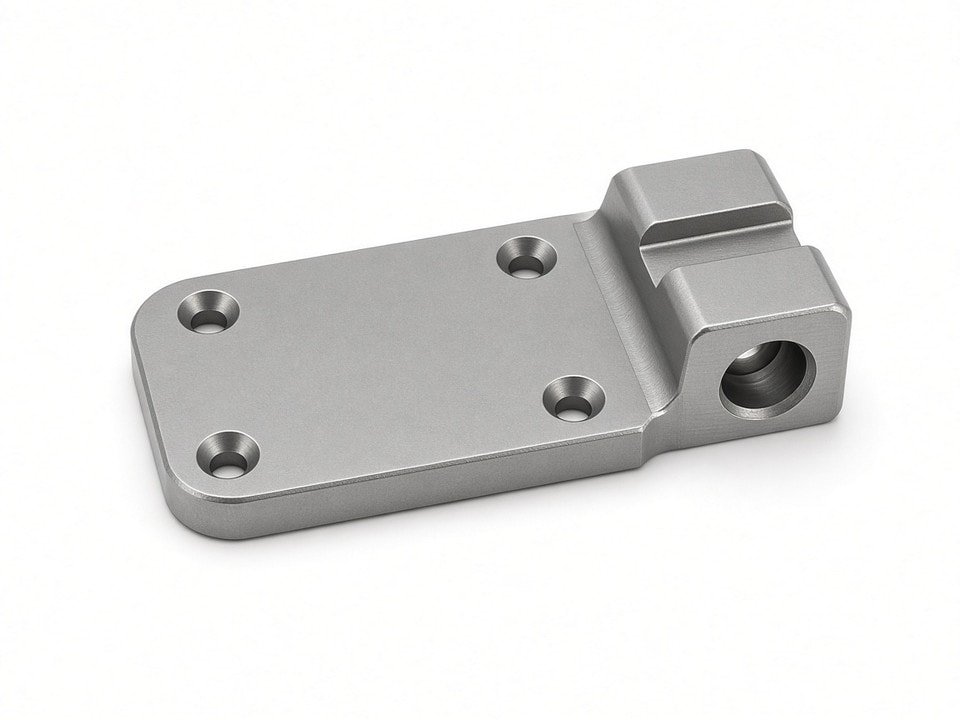
We assess each component against its actual drawing, material requirements, and intended use.
ISO 9001
Quality management system certification; applicability depends on scope and project requirements.
ISO 13485
Certification supported by our operations, subject to scope and project qualification.
AS9100D
Certification applicability can be reviewed during supplier qualification.
Start with the specification
Confirm the grade, standard, and material form
“Grade 1 titanium” identifies a material grade, but a production requirement should also state the applicable standard and product form. Bar, sheet, plate, and other forms may be governed by different specifications. We check the requested grade, standard, condition, and form against your documentation and available supply before proceeding.
If your drawing calls out a particular standard or revision, include it in the RFQ. If it does not, tell us what your engineering or quality team needs the material to meet. We flag missing details for clarification rather than assuming equivalence.
Drawing review
What shapes the machining plan
Titanium’s machining response makes geometry and process planning important. We consider the component as a whole—not just its nominal dimensions—and identify features that may affect tool loading, heat management, stability, dimensional consistency, or inspection.
Thin walls
Wall thickness and support can influence stability and dimensional control.
Slender or long features
Long turned sections and slender profiles can affect process stability.
Small bores and access
Feature access and inspection needs help determine a practical route.
Interrupted cuts
Cut conditions are reviewed as part of the complete part geometry.
Where a feature may create manufacturing or inspection risks, we can raise it during drawing review so requirements are clear before production planning.
Manufacturing resources
Milling, turning, and multi-process components
We select a machining route around the component’s features, tolerances, and production needs. Our equipment inventory supports review of milled profiles, turned diameters, threaded features, cross-holes, and parts combining turning and milling.
25 + 1
CNC machining centers
25 three-axis centers and one four-axis center.
8
Five-axis CNC machines
Listed in our equipment inventory as five-axis.
43 + 15
CNC lathes and turn-mill machines
Resources for turned and multi-feature components.
30 + 13
Automatic and Swiss-type lathes
Across listed configurations.
Additional equipment
Our inventory also includes gang-type lathes, screw machines, conventional milling machines, and surface grinders.
Equipment availability and suitability for Grade 1 titanium are confirmed for each project. The inventory alone does not establish a specific part’s achievable tolerance or surface finish.
Parts we can review
Drawing-based components in a range of forms
We can assess component types such as shafts, pins, sleeves, bushings, housings, brackets, mounting components, threaded parts, precision connectors, small turned components, and custom parts with milled and turned features.
Part size, material form, feature access, quantity, and inspection needs all influence feasibility. We assess those details against the actual drawing and available material rather than relying on a generic process assumption.
Dimensional control and surface requirements
A stated machine precision is not a guarantee of finished-part tolerance. Results depend on the part, datum scheme, feature geometry, material condition, process route, and inspection method. We review critical dimensions and geometric requirements before confirming what we can quote.
Our inspection resources include a coordinate measuring machine, optical measuring systems, height instruments, a concentricity instrument, surface roughness tester, hardness tester, and dimensional gauges. We select methods based on the drawing and agreed quality requirements.
Please identify controlled surfaces, roughness requirements where applicable, and restrictions on marks, burrs, or post-machining treatment. We do not infer a finished surface requirement from appearance alone.
Application context
Consider the component’s service environment
Grade 1 titanium may be specified for material or corrosion-related requirements, but final component performance depends on more than the grade. Media, concentration, temperature, exposure duration, mechanical loading, joining method, and surface condition may all matter.
Tell us how the part will be used and which performance requirements are controlled by your design. We can review those conditions alongside the drawing and material specification. We do not promise application performance that has not been established through appropriate design review, material verification, or testing.
Is Grade 1 the right choice for your part?
Grade selection should follow design requirements and operating conditions, not a material label alone. We can review your specification and clarify questions that may affect sourcing or machining.
- 01Is the required standard, revision, and material form stated?
- 02Are corrosion or other service requirements defined?
- 03Do thin sections or long features need special process consideration?
- 04Which dimensions, datums, threads, and surfaces require inspection?
- 05Are finish and documentation notes complete?
If your design allows alternatives, state that clearly. We will not substitute a different grade or material without your approval.
Project requirements
Quality systems and documentation
Our manufacturing operations are supported by quality management systems certified to ISO 9001, ISO 13485, AS9100D, ISO 14001, and IATF 16949. Applicability depends on certification scope and project requirements, which we can review during supplier qualification.
For controlled or regulated projects, identify required traceability, material documentation, inspection records, or supplier approval steps in your RFQ. We will clarify what documentation is available and applicable before order placement.
Request a Grade 1 titanium machining quote
Send us the details for a feasibility review
We review your information, confirm questions about material availability or process feasibility, and respond with the next steps for quotation.
- 1. Part drawing and 3D model, if available
- 2. Required Grade 1 material standard, revision, and product form
- 3. Annual or order quantity and expected repeat-order schedule
- 4. Critical tolerances, surface requirements, and inspection criteria
- 5. Intended application environment and documentation requirements