CNC machining for industrial equipment
Glass-Filled Nylon CNC Machining
We machine custom components to customer drawings and review project feasibility, material requirements, and inspection needs before quotation. When your application needs higher stiffness, wear resistance, or dimensional stability than an unfilled nylon grade can provide, we assess the exact material and part requirements before recommending a machining approach.
Glass-filled nylon is not one interchangeable material. PA6 or PA66 base resin, glass-fiber content, material condition, part geometry, and service environment can all affect machining and finished-part performance.
Send the complete material grade, drawing, and quantity.
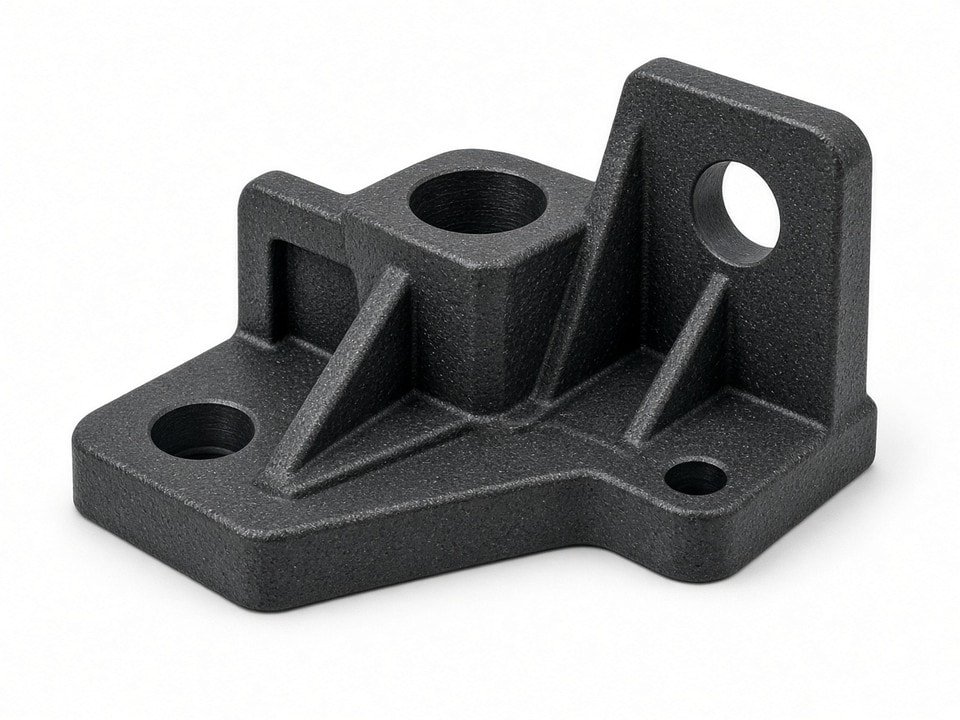
Custom parts
From prototype development to production runs
We assess each drawing for machining suitability and select a process based on part dimensions, geometry, tolerances, material form, and order quantity. Material availability and grade are confirmed as part of the quotation.
Typical components
- Brackets, mounting plates, and housings
- Bushings, sleeves, and wear components
- Shafts and turned parts
- Connectors and threaded components
- Custom parts for machinery, automation, and instrumentation
Available machining processes
- CNC milling
- CNC turning
- Turn-mill machining
- Swiss-type machining
The suitable route depends on the part design and project requirements.
Material specification
A sound machining plan starts with the complete grade
PA6 and PA66 are different base resins, and reinforced grades vary in fiber percentage and material condition. We do not assume one grade is a direct substitute for another. If the specification is incomplete, we clarify it before confirming project scope and quotation.
01
Base resin and reinforcement
Specify PA6 or PA66, the exact glass-fiber percentage or grade designation, and any material standard or supplier designation.
02
Material condition and environment
Identify the supplied condition, conditioning or moisture requirements, and expected temperature, moisture exposure, load, wear, and component contact.
03
Part structure and drawing
We review wall thicknesses, ribs, holes, threads, critical dimensions, tolerances, surface requirements, and inspection criteria.
Machining considerations
Addressing fiber direction, tool wear, and part quality
Glass fibers can influence cutting behavior, edge quality, and surface appearance. Results depend on the grade, stock form, cutting direction, and feature geometry. We review those factors against your drawing rather than applying one assumption to every reinforced nylon part.
Discuss your part requirementsFiber direction and machined features
Prior material processing and the direction in which a feature is cut can influence exposed fiber patterns and surface results. If appearance, strength, or a particular edge condition matters, note it on the drawing or RFQ so we can review feature orientation and machining considerations.
Tool wear and edge quality
Glass reinforcement can increase tool wear compared with unfilled nylon. We consider the specified grade and features when assessing the machining plan. Edges, small holes, thin walls, and intersecting features may need particular attention where burrs or localized fiber exposure could affect fit or appearance.
Surface appearance and finish
Machined appearance can vary with fiber content, cut direction, and feature geometry. Mark cosmetic surfaces and finish requirements clearly on the drawing, including any acceptance criteria, so we can review their suitability for the specified material and process.
Dimensional change and inspection conditions
Nylon can respond to moisture and temperature, with the degree of change depending on grade and part conditions. We consider the material state and service environment when reviewing critical dimensions. Include any defined measurement condition with the drawing so the inspection approach can be discussed before quotation.
Equipment and verification
Process selection backed by drawing-based inspection resources
Our equipment inventory includes CNC milling centers, CNC lathes, turn-mill machines, and Swiss-type lathes. We assess geometry and feature combinations to determine a suitable process route for each project.
Machine precision alone does not guarantee a particular tolerance on every part. We review tolerance requirements in context of the material, geometry, and inspection needs, then confirm what can be supported for the specific project.
Dimensional verification resources
- Coordinate measuring machine3D dimensional and geometric inspection
- Optical measuring systemsProfiles, hole positions, and dimensions
- Height measuring instruments and gauges
- Micrometers, calipers, pin gauges, and gauge blocks
- Thread plug and ring gaugesFor applicable threaded features
Our quality management systems are certified to ISO 9001, ISO 13485, AS9100D, ISO 14001, and IATF 16949. Certification scope should be confirmed against the requirements of the relevant project.
Application review
Is machined glass-filled nylon right for your part?
It may be worth evaluating when a design needs a reinforced polymer component with specified stiffness, wear characteristics, or dimensional behavior. Suitability depends on the exact grade and operating conditions—not just the material family name.
Before requesting a quote, consider
- 01Does the drawing identify the exact PA6 or PA66 grade and glass content?
- 02Are moisture conditioning or other material conditions specified?
- 03Which dimensions, fits, edges, and surfaces are functionally critical?
- 04Are fiber exposure and machined surface appearance acceptable?
- 05What loads, temperatures, moisture, and wear will the part encounter?
- 06Are material documents or inspection records required?
Still evaluating the material? Share your application conditions and design requirements so we can review open machining and specification questions before a production decision.
Request a quotation
Send us your material grade, drawing, and quantity
We will review the information, clarify open points, and assess an appropriate CNC machining process for your part.
To help us prepare a useful quotation, include:
- The complete material grade, including PA6 or PA66 and glass-fiber content
- A 2D drawing and, if available, a 3D CAD model
- Required quantity and expected order frequency
- Critical dimensions, tolerances, surface, and edge requirements
- Material condition, service environment, and documentation or inspection requirements