Materials guide · CNC machining
6061 vs 6082 Aluminum: Key Differences, Strength, and How to Choose
Compare 6061 and 6082 aluminum—composition, strength, machinability, tempers, and how to choose a grade from your drawing.
Quick Answer: 6061 vs 6082 at a Glance
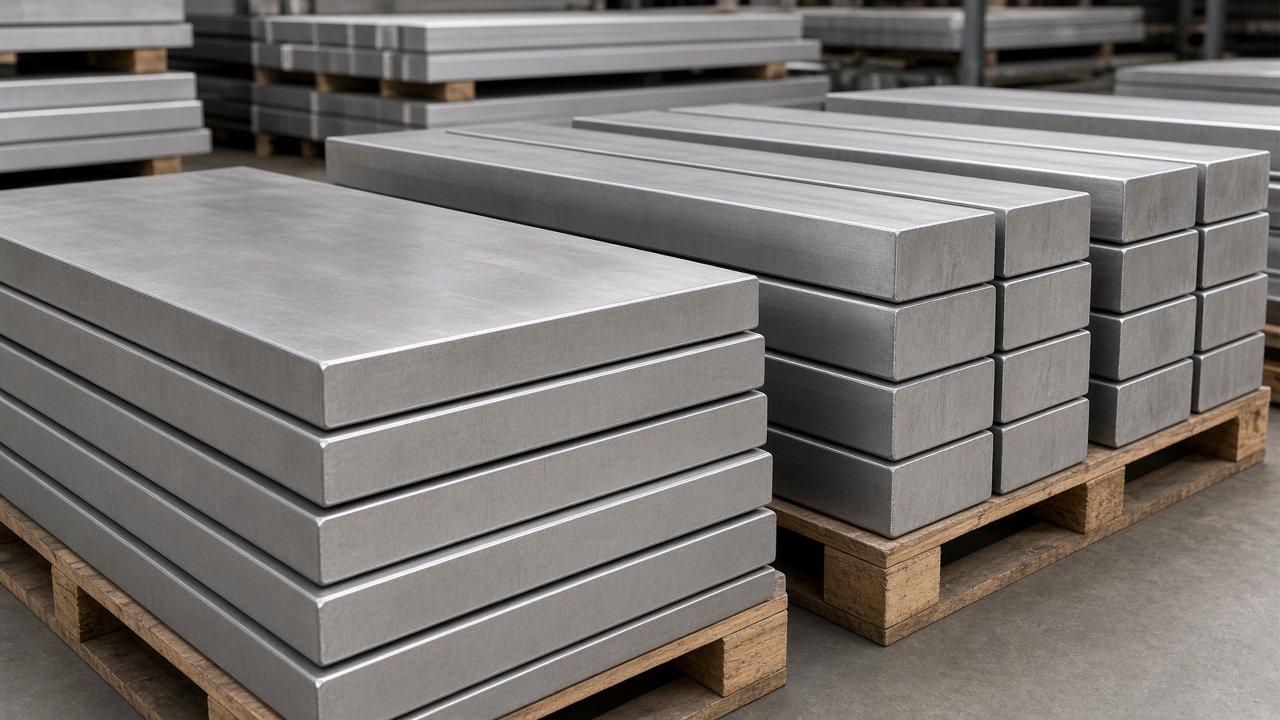
In comparable T6 product forms, 6082 is typically the stronger choice and is widely used for structural work, particularly in European markets. 6061 is a versatile, readily available general-purpose alloy and a common North American choice for machined parts and fabricated components. The better option depends on the application, temper, product form, thickness, and certified supplier values.
| Comparison point | 6061 | 6082 |
|---|---|---|
| Common temper | T6; T651 plate is also common | T6; T651 or other stress-relieved supply may be available by form and specification |
| Strength | Strong general-purpose alloy; values depend on form and thickness | Often higher in comparable T6 structural products |
| Corrosion resistance | Good general atmospheric resistance | Good general atmospheric resistance |
| Weldability | Weldable; heat-affected zone loses strength | Weldable; heat-affected zone loses strength |
| Machinability | Widely used for CNC machining; commonly stocked | Machines well, with results influenced by temper and source |
| Typical cost context | Often easier to source and cost-effective in North America | Regional availability and certification can affect delivered cost |
This is a selection-level comparison, not a design allowable. Confirm values in the applicable material standard and the supplier’s certificate for the exact alloy, temper, dimensions, and product form.
What Are 6061 and 6082 Aluminum Alloys?
Both 6061 and 6082 belong to the 6000 series: heat-treatable aluminum alloys whose principal alloying elements are magnesium and silicon. Heat treatment can produce useful combinations of strength, corrosion resistance, formability, and machinability, making these grades common choices for structural and machined components.
They are commonly supplied in T6 condition, and depending on the market and specification, can be found as extrusions, plate, sheet, bar, or other forms. 6061 is widely specified under North American systems, including ASTM product standards such as ASTM B209 for sheet and plate and ASTM B221 for extruded shapes. 6082 is an EN alloy designation; chemical composition is addressed by EN 573, while EN 755 covers mechanical properties and tolerances for extruded products.
Engineering note
Standards are product-specific. A designation in a drawing should identify the required alloy, temper, product form, governing specification, and any critical property or tolerance requirements.
Chemical Composition: 6061 vs 6082
The composition ranges below are representative limits commonly associated with these alloy designations. Exact limits and reporting conventions can vary by standard and product specification, so the applicable standard and mill test report (MTR) take precedence.
| Element, wt.% | 6061 typical range or limit | 6082 typical range or limit |
|---|---|---|
| Silicon (Si) | 0.40–0.80% | 0.70–1.30% |
| Magnesium (Mg) | 0.80–1.20% | 0.60–1.20% |
| Manganese (Mn) | 0.15% max | 0.40–1.00% |
| Copper (Cu) | 0.15–0.40% | 0.10% max |
| Chromium (Cr) | 0.04–0.35% | 0.25% max |
| Iron (Fe) | 0.70% max | 0.50% max |
| Titanium (Ti) | 0.15% max | 0.10% max |
| Zinc (Zn) | 0.25% max | 0.20% max |
| Aluminum (Al) | Balance | Balance |
The most visible compositional distinction is manganese: 6082 typically contains about 0.4–1.0% Mn, which helps control grain structure and contributes to its strength profile. 6061 includes copper and chromium within its specified range. These elements influence the alloy’s response to processing, including corrosion behavior and quench sensitivity; they do not make either grade universally better in every environment.
When reviewing an MTR, match the heat or lot number to the supplied material and drawing. Check the reported chemistry against the cited standard, verify the temper and product form, and confirm that the document identifies the material traceably. For critical parts, do not rely on a generic alloy brochure in place of the lot-specific certificate.
Mechanical Properties Compared
Mechanical properties depend on temper, thickness, product form, processing route, and the standard used. For an initial comparison, 6082-T6 often has higher minimum strength in structural products, but the exact certified values for the material you plan to buy are the values to use in design and inspection planning.
Tensile Strength
As a broad reference, 6061-T6 plate is commonly specified with a minimum tensile strength around 290 MPa, while 6082-T6 products often have minimums around 295 MPa or higher, depending on the product and thickness. Extrusion specifications may set different minima from plate specifications. That variation is why a single headline value should not be carried across all 6061 or 6082 stock.
Yield Strength
Yield strength marks the point at which a material begins to deform permanently. It is central to structural checks, allowable stress calculations, and safety margins. Typical T6 values for both grades are in the several-hundred-megapascal range; 6082 commonly carries a higher minimum in comparable structural forms, but the drawing’s governing code and certified product values must determine the design basis.
Elongation and Ductility
Elongation is an indicator of how much a material can stretch before fracture during a tensile test. It matters when a component must be bent, formed, or tolerate local deformation. Higher-strength tempers can be less forgiving than softer tempers, and the result varies with thickness and product form. If a part includes tight bends or impact-sensitive features, assess the actual temper and forming radius instead of selecting solely by tensile strength.
Hardness and Fatigue Performance
Hardness generally tracks strength and temper, so T6 material is substantially harder than annealed or solution-treated conditions. It is useful for incoming checks and process control, but a hardness reading is not a substitute for specified tensile properties. Fatigue life, meanwhile, depends on stress range, surface finish, notches, residual stress, joint details, and loading cycles—not alloy designation alone.
For cyclically loaded parts
Use design-specific fatigue data and account for geometry, finish, and assembly conditions. For a critical shaft, bracket, or frame, have the design reviewed against the applicable engineering standard rather than inferring fatigue performance from a static strength comparison.
Shear Strength and Elastic Modulus
The elastic modulus of both alloys is approximately 69 GPa, so stiffness is usually not a meaningful selection advantage for one over the other. Shear strength matters at joints, pins, fasteners, and loaded interfaces; use the value required by the relevant design method and verify the material condition. In practical joint design, bearing stresses, edge distance, fastener fit, and load path can be just as important as the nominal alloy shear capacity.
Overall Mechanical Performance Verdict
For load-bearing structural parts where higher minimum strength is valuable, 6082 is often the leading candidate in comparable T6 forms. 6061 remains a capable, versatile option with broad availability and a strong machining and fabrication supply base. For either alloy, the right choice is the one whose certified properties, geometry, and fabrication route satisfy the component’s design requirements.
Temper Options: T6, T651, and Others
Temper describes the processing condition of the alloy, not a separate alloy composition. A temper designation can change strength, ductility, and dimensional behavior enough to affect whether a part can be formed, welded, or machined as intended.
Temper is part of the identity of the material callout. Ordering “6061” without temper, or accepting T4 stock when the print says T651, is a specification miss. Stress-relieved tempers (for example T651) matter when machining thick plate that must hold flatness. Confirm temper on both the PO and the mill cert before first-article cutting.
-
1
T4: solution heat-treated and naturally aged
T4 is generally more formable than T6 and may be selected where subsequent forming or natural aging is part of the process plan.
-
2
T5: cooled from a shaping process and artificially aged
This condition is commonly associated with certain extruded products and their manufacturing route; availability and properties are specification-dependent.
-
3
T6: solution heat-treated and artificially aged
T6 is a common strength-focused temper for both 6061 and 6082 and is widely encountered in machined and structural stock.
-
4
T651: T6 plus stress relief by stretching
Stress-relieved plate can be useful for machining because it is intended to reduce residual-stress movement as material is removed. Confirm the exact temper designation on the stock certificate.
For a deep-pocketed plate part, for example, stress-relieved stock may help limit distortion as the machining sequence opens up the material. It does not eliminate the need for balanced stock removal, suitable fixturing, and a controlled machining plan.
Corrosion Resistance Differences
Both alloys generally offer good resistance to atmospheric corrosion in ordinary service. The copper present in 6061 can influence its corrosion response compared with lower-copper 6082, but that difference is not a blanket rule that determines performance in every environment. Surface condition, crevices, dissimilar-metal contact, exposure, and maintenance all matter.
Neither grade should be treated as immune to marine or saltwater attack. For components exposed to chloride-rich conditions, assess the exposure and design details carefully. Consider anodizing, a suitable coating, sealing, or another protective finish when the application requires added environmental protection.
Design check
Specify the finish and its acceptance criteria on the drawing or purchasing specification. A finish may affect dimensions, electrical contact, appearance, and the fit of threaded or mating features.
Weldability Differences
Both 6061 and 6082 can be welded using processes such as TIG and MIG when the procedure, joint preparation, and filler are suitable. Welding a heat-treatable T6 alloy locally changes its condition: the heat-affected zone loses strength, so the finished assembly should not be assumed to retain the parent material’s full T6 properties.
Filler selection depends on the joint, service environment, required properties, and post-weld finishing. 4043 and 5356 are common filler options considered for aluminum welding, but neither is universally correct. A qualified welding procedure should identify the compatible filler and any required inspection or treatment.
Reduce cracking risk: control joint cleanliness, fit-up, restraint, and heat input; follow a suitable qualified procedure.
Limit distortion: use a balanced weld sequence and appropriate fixturing, especially on thin sections or asymmetric assemblies.
Plan heat treatment deliberately: post-weld heat treatment may be considered for a specific design, but it is not a simple universal step and may affect distortion and properties.
Machinability Comparison
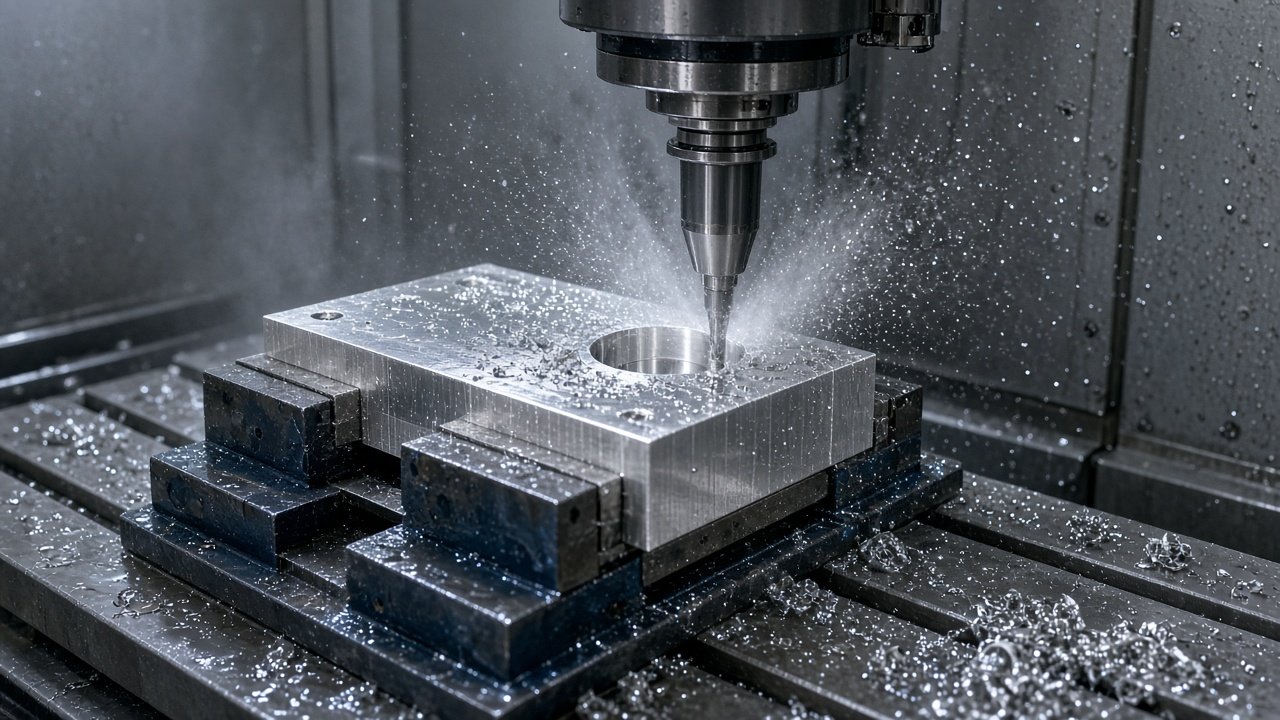
6061 is a familiar choice for CNC work because it is widely available in many product forms and is commonly selected for predictable machining and a good surface finish. Tool geometry, cutting conditions, material temper, and machine setup still have a substantial effect on chip control, burr formation, tool wear, and the final finish.
6082 can also be machined effectively. Its behavior may differ from 6061 depending on the specific temper, source, and stock form, so a process proven on one grade should be validated before transferring it directly to the other—see our 6082 machining service notes for grade-specific context. For tight-tolerance parts, pay attention to workholding, stress relief, stock allowance, and the order in which material is removed.
Machining consideration
When comparing quotations, look beyond the bar or plate price. A different alloy or temper can change cycle time, finishing requirements, scrap risk, and the amount of process qualification needed.
We review drawing requirements and material condition alongside feature geometry and tolerances when planning milling, turning, or turn-mill work. That review helps establish an appropriate process and inspection approach for the actual component rather than for an alloy label in isolation.
Electrical and Thermal Conductivity
Both alloys conduct heat and electricity, but neither is usually selected as a high-conductivity specialty material. Many reference sources show 6061 with slightly better electrical conductivity than 6082, though reported values vary with composition and temper. For a heat sink, busbar, or enclosure, compare certified or supplier-referenced conductivity data with the thermal and electrical demands of the design; also account for geometry, contact resistance, and finish.
Applications of 6061 Aluminum
6061’s combination of strength, general corrosion resistance, machining familiarity, and broad availability makes it a practical starting point for many general-purpose components.
Machined components and frames
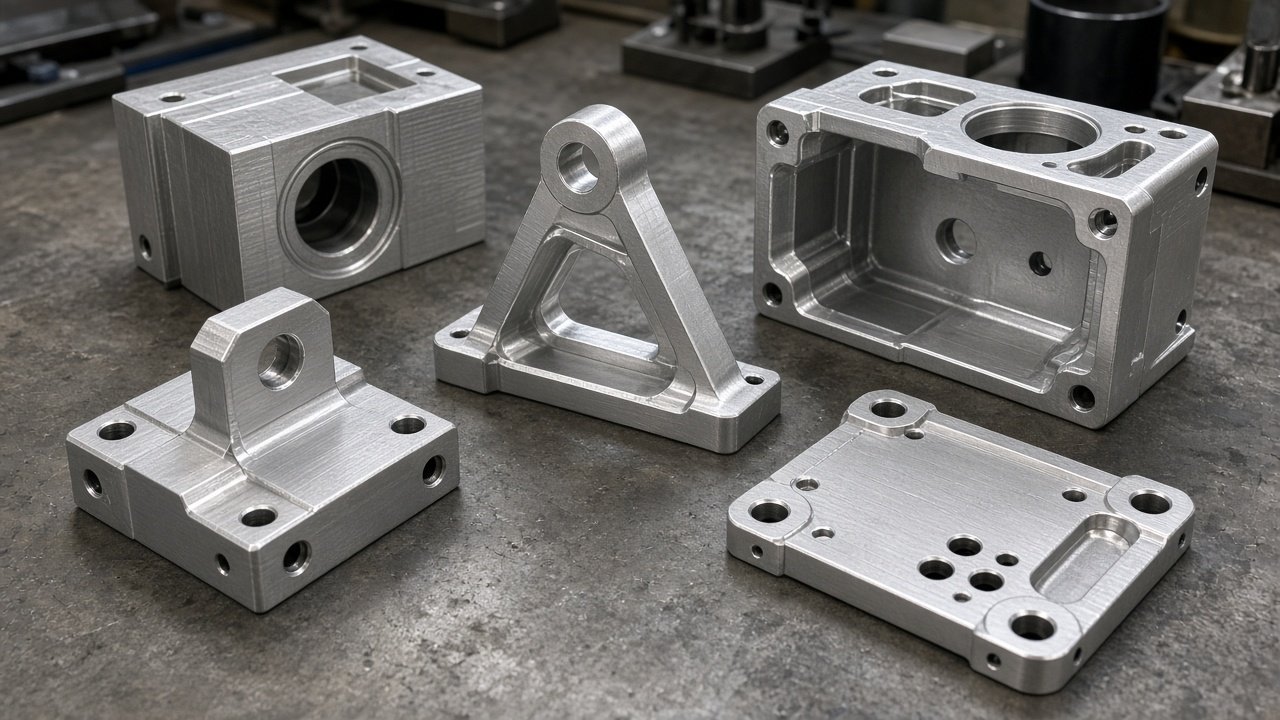
Common examples include brackets, mounting plates, housings, frames, and other CNC-machined parts. It suits many applications where a balance of strength and machinability is more important than maximizing strength alone.
Marine, transport, and equipment parts
6061 is used for items such as marine fittings, bicycle parts, and automotive components, with suitability depending on the component design and exposure. It is also used for electronic enclosures and industrial equipment details.
For buyers in North America, familiar standards and stock availability can make 6061 an efficient option for prototypes and repeat production. That sourcing convenience can be especially helpful when a design needs several machined features and a consistent material supply. For stock forms, temper callouts, and machining considerations tied to this grade, see our 6061 CNC machining overview.
Applications of 6082 Aluminum
6082 is often specified where structural performance is important and is widely used in European engineering. Typical applications include bridges, cranes, truss structures, transport frames, and heavy-duty structural extrusions. These uses benefit from the alloy’s strength profile, subject to the relevant product specification and design checks.
A structural extrusion might combine an efficient cross-section with mounting features to reduce assembly parts, while a transport frame may use 6082 where the load path and allowable weight make the strength-to-mass balance useful. In both cases, the final selection still depends on joint design, fatigue loading, corrosion exposure, manufacturing constraints, and certified material values.
Is 6082 Stronger Than 6061?
Usually, in typical T6 comparisons, yes: 6082 commonly offers higher strength than 6061 in comparable structural product forms. However, the result depends on product form, thickness, temper, applicable standard, and supplier specification. Use the exact certified minimums—not a generalized comparison—to verify a design.
Strength is not always the deciding factor. If 6061 already meets the design requirement and is easier to source, machine, or qualify for the project, changing to a stronger grade may add cost or supply complexity without a meaningful component benefit.
What Is 6082 Aluminum Used For?
6082 is used for structural, transport, and industrial components where strength and efficient weight are important. Examples include crane and bridge elements, trusses, transport frames, and heavy-duty extrusions. See Applications of 6082 Aluminum for more context on how these uses influence material selection.
What Is 6082 Aluminum Equivalent To?
The European designation is commonly written EN AW-6082. Other regional systems may list approximate counterparts or cross-references, but an equivalence label does not guarantee that chemistry, temper, product form, mechanical minimums, or certification requirements match one for one.
Before substituting another designation, compare the governing standards and the actual required properties. For a regulated or safety-critical part, have the substitution reviewed and approved through the project’s engineering and supplier-quality process.
What Is Better Than 6061 Aluminum?
There is no universal upgrade from 6061; the right alternative depends on what “better” means for the part.
| If the priority is… | Consider | What to verify |
|---|---|---|
| Higher strength for structural work | 6082 | Form, temper, thickness, standard, and certified properties |
| Very high strength | 7075 | Weldability, corrosion exposure, fabrication, and design allowables |
| Marine saltwater service | 5083 | Exposure, joining method, finish, and applicable marine requirements |
| Architectural extrusions | 6063 | Strength needs, surface finish, extrusion geometry, and specification |
Price and Cost Differences
6061 is often more affordable and readily stocked in North America, while 6082 availability and pricing vary by region, stock form, dimensions, and certification requirements. There is no useful universal price difference without a specific quantity, size, source, and delivery point.
For a machined component, compare total delivered part cost rather than material price alone. Consider machining time, setup and qualification, tool life, scrap rate, finishing, lead time, and the cost of maintaining a repeatable supply. If a grade is required by the design, confirm it early so procurement and manufacturing can plan around realistic stock availability.
When to Choose 6061 vs 6082: Decision Guide
We recommend moving through the decision in this order. It keeps the discussion focused on the part’s real requirements instead of treating alloy choice as a stand-alone purchasing decision.
-
1
Set the load and strength requirement
Identify the design loads, allowable stresses, safety margins, and any fatigue or impact requirements. If comparable T6 6082 values are needed to meet the design, verify the exact certified product specification.
-
2
Define the environment
Review atmospheric, marine, chemical, and temperature exposure, then specify protective finish and maintenance needs.
-
3
Map the fabrication route
Account for CNC machining, forming, welding, extrusion, and any post-process. Temper and residual stress can affect both fabrication and final dimensions.
-
4
Check regional sourcing and documentation
Confirm the required standard, available product form, certification, traceability, lead time, and supplier capacity in the target region.
-
5
Compare total cost and validate
Compare material, processing, finishing, scrap, and delivery risks. For critical parts, validate the choice through engineering review and appropriate inspection or testing.
Quick selection summary
Choose 6061 when its certified properties meet the design and its broad availability or machining familiarity supports the project. Consider 6082 when higher structural strength is useful and the required product form and documentation are available. If neither matches the environment or performance target, evaluate another alloy rather than forcing the comparison.
Sourcing and Quality Verification
A reliable comparison starts with a clearly specified material and ends with documented verification. When requesting a quote or approving a shipment, we recommend confirming the following items against the drawing and purchase specification.
No silent swap: 6061 and 6082 are related 6xxx alloys, not automatic equivalents. Do not substitute 6061 for a 6082 callout (or the reverse) based on name similarity, regional stock habit, or a verbal “they are close enough.” If the drawing names an alloy, temper, and product standard, that combination governs purchasing and machining. A revision is required before any alloy change.
Mill certificates must match the blank heat or lot actually cut. Chemistry and mechanical results on the MTR should be checked against the purchase specification (for example ASTM B221 / B209 / EN AW product standards as applicable) and against the temper stated on the print—T6 vs T651 vs T4 is not a paperwork footnote. Section thickness affects achievable strength in some product forms; do not assume thin-extrusion handbook values apply to thick plate without checking the governing table.
On the RFQ, include alloy, temper, product form, certificate type, critical GD&T, finish, and whether European 6082 stock may be dual-certified or must remain as named. We machine aluminum under ISO 9001, ISO 13485, and AS9100D quality management systems within certification scope; send the documentation list you need with the drawing package.
-
1
Mill certificate: Request the MTR or material certificate identifying chemistry, mechanical properties where specified, product form, and governing specification.
-
2
Traceability: Confirm heat or lot identification is retained through receiving, cutting, machining, and shipment where required.
-
3
Temper and dimensions: Verify the temper, stock size, tolerances, and condition match the component’s manufacturing plan.
-
4
Inspection and testing: Define required dimensional checks, hardness checks, finish inspection, or third-party testing for critical applications.
For drawing-based production, material verification should connect to the actual inspection plan. Our quality operations use dimensional and material inspection resources to support drawing-based verification, with the applicable requirements agreed for each project. For safety-critical or regulated components, establish any required independent testing and acceptance criteria before production begins.
Frequently Asked Questions
Is 6082 stronger than 6061?
Generally, 6082 has higher strength in comparable T6 structural products. Confirm the exact values for the specified form, thickness, temper, and standard before using them for design.
What is 6082 aluminum used for?
It is used for structural and transport applications such as bridges, cranes, trusses, transport frames, and heavy-duty extrusions, subject to the design and product specification.
What is aluminium 6082 equivalent to?
The European designation is EN AW-6082. Any regional cross-reference is approximate until its chemistry, temper, product form, and mechanical requirements are verified against the project specification.
What is better than 6061 aluminum?
For higher structural strength, consider 6082; for very high strength, evaluate 7075; for marine saltwater service, consider 5083; and for architectural extrusions, evaluate 6063. The best choice depends on the application.
Can 6061 and 6082 be welded together?
They can be joined by suitable aluminum welding processes, but filler selection and procedure require engineering review. Common fillers considered include 4043 and 5356; welding also reduces strength in the heat-affected zone of T6 material.
Which is easier to machine, 6061 or 6082?
6061 is often the familiar, readily available CNC choice. 6082 also machines well, but its behavior can vary with temper, product form, and supplier, so validate the process for the actual stock.
Final Verdict: Choosing Between 6061 and 6082
The central difference in 6061 vs 6082 aluminum alloys is their typical balance of strength and sourcing context: 6082 often offers higher strength for structural use, while 6061 is a versatile, widely available choice for general-purpose applications and CNC-machined components. Their properties still depend on temper, form, dimensions, standard, and supplier certification.
For a new or repeat-order part, specify the required material condition, review the engineering requirements, and verify the supplied stock with appropriate documentation. YJCNC can review your drawing and discuss material, machining, and inspection considerations for a custom component. Contact us to request a machining quotation or compare supplier options for your project.
Discuss your CNC machining projectTalk with YJCNC
Need help specifying or machining an aluminum component?
Share your drawing, material requirements, quantity, and inspection expectations. We can discuss the manufacturing approach and the information needed to prepare a project quotation.